
What Is the Naturally Aspirated Meaning?
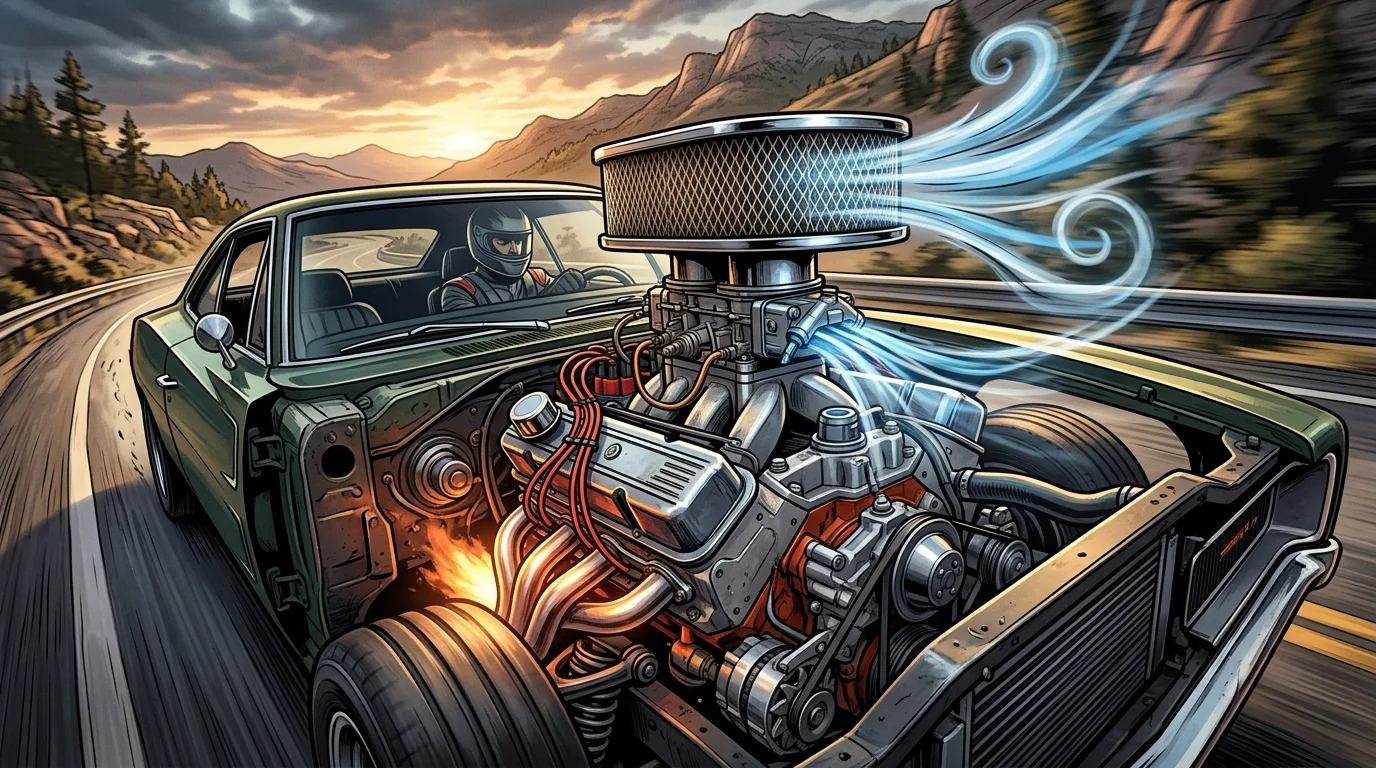
The naturally aspirated meaning refers to an engine that takes in air naturally without mechanical or forced assistance.
Quick Definition
A naturally aspirated engine uses atmospheric pressure to pull air into the cylinders for combustion.
Most Common Meaning
The most common naturally aspirated meaning describes a gasoline or diesel engine that does not use a turbocharger or supercharger.
Key Characteristics
- No turbocharger
- No supercharger
- Relies on atmospheric pressure
- Simpler design
- Direct throttle response
How Does a Naturally Aspirated Engine Work?
The naturally aspirated meaning becomes easier to understand when looking at the engine process.
Step 1: Air Intake
As the piston moves downward, it creates a vacuum inside the cylinder.
Step 2: Air Enters
Atmospheric pressure pushes air through the intake system into the cylinder.
Step 3: Fuel Mixing
The air mixes with fuel inside the combustion chamber.
Step 4: Combustion
The mixture ignites and produces power.
This cycle repeats continuously while the engine operates.
Naturally Aspirated vs Turbocharged Engines
The naturally aspirated meaning is often compared to turbocharged engines.
| Feature | Naturally Aspirated | Turbocharged |
|---|---|---|
| Air Intake | Atmospheric pressure | Compressed air |
| Complexity | Simpler | More complex |
| Maintenance | Generally lower | Often higher |
| Power Output | Lower | Higher |
| Throttle Response | Immediate | May experience turbo lag |
Turbochargers increase engine power by forcing additional air into the cylinders.
Naturally Aspirated vs Supercharged Engines
The naturally aspirated meaning also differs from supercharged engines.
Naturally Aspirated
- Uses atmospheric pressure
- No forced induction
- Simpler design
Supercharged
- Uses a belt-driven compressor
- Forces extra air into the engine
- Produces additional power
Both systems have unique advantages depending on driving goals.
Advantages of Naturally Aspirated Engines
The naturally aspirated meaning is often associated with several benefits.
Reliability
Fewer components can reduce potential mechanical issues.
Simpler Maintenance
Without forced-induction systems, maintenance may be less complicated.
Immediate Throttle Response
Power delivery is typically smooth and predictable.
Linear Power Delivery
Acceleration often feels more natural and consistent.
Lower Operating Complexity
The overall engine system is generally simpler.
Disadvantages of Naturally Aspirated Engines
While beneficial, the naturally aspirated meaning also comes with limitations.
Less Power
Naturally aspirated engines usually produce less power than similarly sized turbocharged engines.
Reduced High-Altitude Performance
Lower atmospheric pressure can decrease engine efficiency at higher elevations.
Larger Engines May Be Needed
Manufacturers sometimes require larger engine displacement to achieve desired power levels.
Why Drivers Like Naturally Aspirated Engines
The naturally aspirated meaning appeals to many automotive enthusiasts.
Reasons include:
- Predictable acceleration
- Smooth engine response
- Simpler engineering
- Traditional driving feel
- Long-term reliability
Many drivers appreciate the direct connection between throttle input and power output.
Examples of Naturally Aspirated Vehicles
The naturally aspirated meaning applies to many vehicles throughout automotive history.
Examples include:
- Honda Civic
- Toyota Corolla
- Mazda MX-5 Miata
- Ford Mustang GT
Many modern vehicles still use naturally aspirated engines despite the rise of turbocharging.
Examples of Naturally Aspirated Meaning
Example 1
Person A: What does naturally aspirated mean?
Person B: It means the engine draws air in without a turbocharger or supercharger.
Meaning: Basic definition.
Example 2
Person A: Is my car naturally aspirated?
Person B: If it doesn’t have a turbo or supercharger, it probably is.
Meaning: Vehicle classification.
Example 3
Person A: Why do enthusiasts like naturally aspirated engines?
Person B: They provide smooth and predictable power delivery.
Meaning: Driving preference.
Example 4
Person A: Do naturally aspirated engines have turbo lag?
Person B: No, because they don’t use turbochargers.
Meaning: Performance characteristic.
Example 5
Person A: Are naturally aspirated engines reliable?
Person B: Many people consider them highly reliable due to their simpler design.
Meaning: Reliability benefit.
Common Misunderstandings About Naturally Aspirated Engines
Naturally Aspirated Does Not Mean Slow
Many powerful performance cars use naturally aspirated engines.
Bigger Doesn’t Always Mean Better
Engine performance depends on many factors besides displacement.
Naturally Aspirated Engines Still Need Air Intake Systems
They simply do not use forced induction devices.
Related Automotive Terms
| Term | Meaning |
|---|---|
| Turbocharger | Exhaust-driven air compressor |
| Supercharger | Belt-driven air compressor |
| Forced Induction | Method of compressing intake air |
| Horsepower | Measure of engine power |
| Torque | Rotational force produced by an engine |
| Combustion Chamber | Area where fuel burns |
| Engine Displacement | Total cylinder volume |
| Throttle Response | Speed of engine reaction to input |
Is Naturally Aspirated Positive, Negative, or Neutral?
The naturally aspirated meaning is neutral. Whether it is considered better depends on the driver’s priorities, such as reliability, power, efficiency, or driving experience.
Related posts:
 Best Frequency Meaning Explained Definition, Uses, Examples & How to Understand It (2026)
 Hilarious Bridge Troll Meaning Explained Definition, Folklore, Internet Usage & Examples (2026)
 Orange Ladybug Meaning Symbolism, Spiritual Significance, Identification & Facts (2026)
 Ezekiel Name Meaning Origin, Biblical Significance, Personality Traits & Popularity (2026)