
What Does Ravine Mean?
Quick Definition
The ravine meaning refers to a deep, narrow landform with steep sides, usually created by water erosion.
Most Common Meaning
A ravine is a long, narrow depression in the ground with steep slopes that often contains a stream or river at its base.
Key Characteristics
A ravine typically has:
- Steep sides
- Narrow shape
- Significant depth
- Water erosion
- Natural formation
Origin of the Word Ravine
The ravine meaning comes from the French word ravine, meaning a violent rush of water or a channel carved by erosion.
The word entered English in the 18th century and became widely used by geographers and naturalists to describe deep erosion valleys.
Today, the term is commonly used in geography and environmental studies.
How Ravines Form
The ravine meaning is closely connected to erosion.
Ravines usually form through the following process:
Step 1
Rainfall or melting snow creates flowing water.
Step 2
The water gradually removes soil and rock.
Step 3
The channel becomes deeper over time.
Step 4
Continuous erosion widens and steepens the sides.
After many years, the result is a deep ravine.
Features of a Ravine
The ravine meaning includes several distinctive features.
Most ravines have:
- A narrow floor
- Steep walls
- Natural drainage
- Vegetation
- Seasonal or permanent streams
Some ravines remain dry for much of the year, while others contain flowing water year-round.
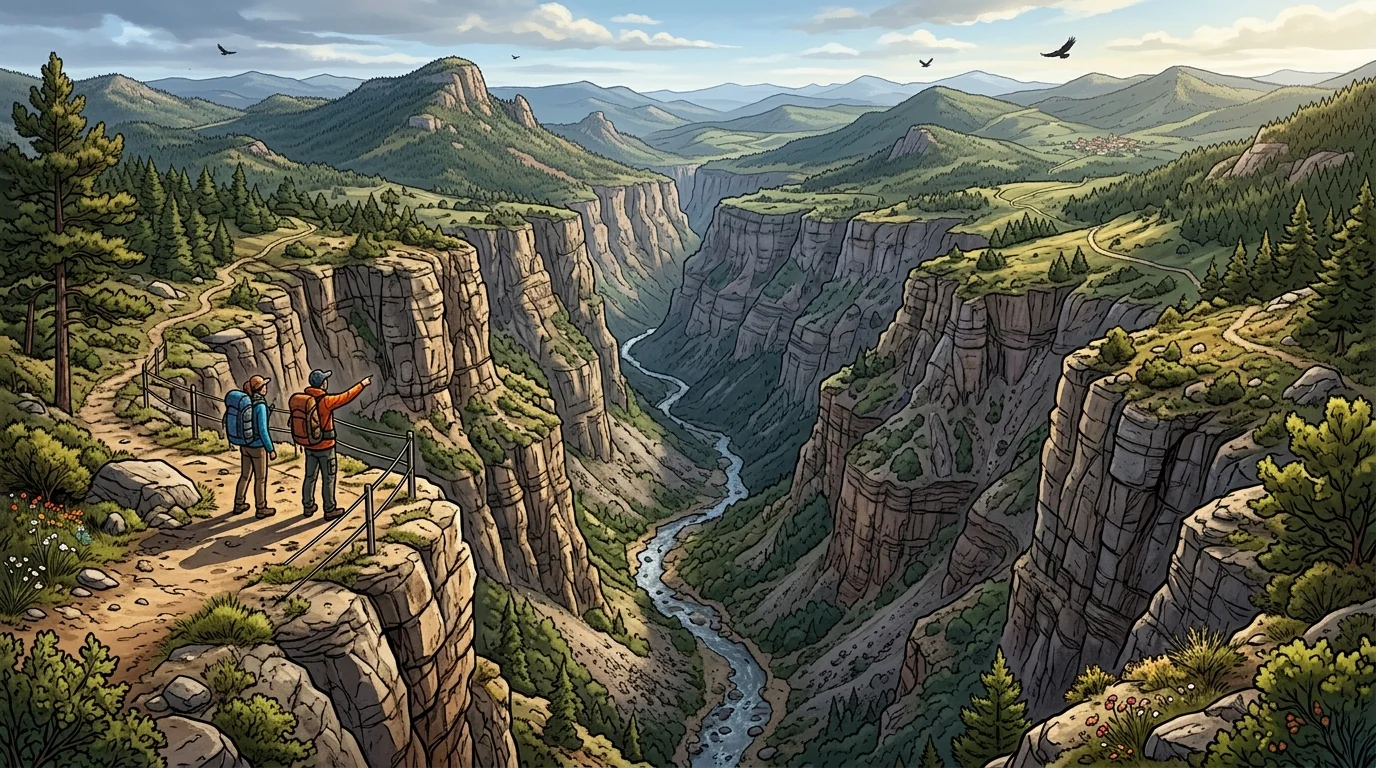
Ravine Meaning in Geography
The ravine meaning is important in physical geography.
Geographers study ravines because they:
- Show erosion processes
- Influence ecosystems
- Affect land use
- Shape river systems
- Create unique habitats
Ravines are found on every continent except Antarctica.
Ravine vs Valley
The ravine meaning is often confused with a valley.
Ravine
- Narrow
- Deep
- Steep-sided
- Usually created by erosion
Valley
- Much wider
- Larger
- May contain rivers or plains
- Often supports settlements
Every ravine is a type of valley, but not every valley is a ravine.
Ravine vs Canyon
These landforms also differ.
Ravine
- Smaller
- Narrower
- Shallower
- Often formed by streams
Canyon
- Much larger
- Very deep
- Massive rock walls
- Usually carved by large rivers
Canyons are generally far larger than ravines.
Ravine Meaning in Literature
Writers often use the ravine meaning to create vivid scenery.
Examples include:
- Adventure novels
- Mystery stories
- Nature writing
- Poetry
A ravine may symbolize:
- Isolation
- Danger
- Beauty
- Wilderness
- Discovery
Ravine Meaning in Hiking and Outdoor Recreation
The ravine meaning is important for hikers and explorers.
Ravines often provide:
- Scenic views
- Wildlife habitats
- Water sources
- Challenging trails
However, steep slopes can also present safety risks during heavy rain or unstable conditions.
Examples of Ravine Meaning
Example 1
Person A: What does ravine mean?
Person B: It is a deep, narrow gorge formed by water erosion.
Meaning: Basic definition.
Example 2
Person A: How did the ravine form?
Person B: Years of flowing water gradually carved it into the landscape.
Meaning: Formation process.
Example 3
Person A: Is a ravine the same as a canyon?
Person B: No. A canyon is generally much larger and deeper.
Meaning: Geographic comparison.
Example 4
Person A: Why do hikers visit ravines?
Person B: They offer beautiful scenery and interesting trails.
Meaning: Recreation.
Example 5
Person A: Can rivers flow through ravines?
Person B: Yes. Many ravines contain streams or small rivers.
Meaning: Natural feature.
Common Misunderstandings About Ravines
Ravines Are Not Always Dry
Many ravines contain permanent or seasonal streams.
Ravines Are Smaller Than Canyons
Although both involve steep sides, ravines are usually much smaller.
Ravines Form Naturally
Most ravines develop through long-term erosion rather than sudden geological events.
Synonyms of Ravine
Depending on context, similar words include:
- Gorge
- Gully
- Chasm
- Hollow
- Defile
- Valley
- Gulch
- Canyon (larger equivalent)
- Watercourse
- Trench
Antonyms of Ravine
Common opposites include:
- Plateau
- Plain
- Flatland
- Upland
- Ridge
Related Terms
| Term | Meaning |
|---|---|
| Valley | Broad low area between hills or mountains |
| Canyon | Deep valley with steep rock walls |
| Gorge | Narrow valley with steep sides |
| Gully | Small channel formed by erosion |
| Erosion | Wearing away of soil or rock |
| Stream | Small flowing body of water |
| Watershed | Area draining into a river system |
| Topography | Physical features of the land |
Is Ravine Positive, Negative, or Neutral?
The ravine meaning is generally neutral.
Positive associations include:
- Natural beauty
- Wildlife
- Outdoor recreation
- Scenic landscapes
Negative associations may include:
- Difficult terrain
- Flash floods
- Landslides
- Travel obstacles
The interpretation depends on context.
Related posts:
 Miles Name Meaning Origin, History, Personality Traits & Popularity (2026)
 Best CW Meaning Definition, Social Media, Texting, Medical & Other Uses (2026)
 Scarab Meaning Symbolism, Ancient Egypt, Spiritual Significance & Complete Guide (2026)
 Best All Hands on Deck Meaning Definition, Origin, Examples, Workplace Usage & Complete Guide (2026)