
What Does Wi-Fi Mean?
Quick Definition
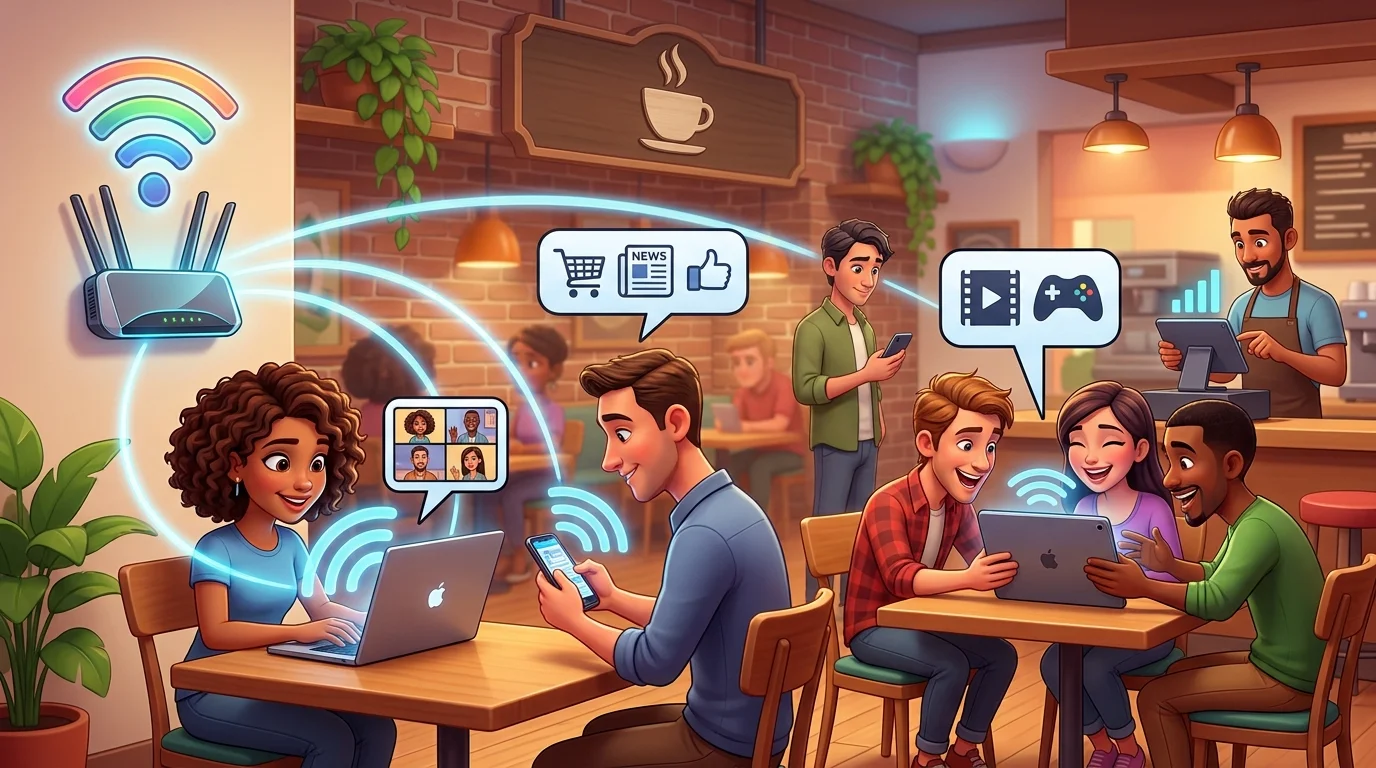
The Wi-Fi meaning refers to wireless technology used for connecting devices to networks without cables.
Most Common Meaning
Wi-Fi allows devices to:
- Access the internet
- Share files
- Connect to local networks
- Communicate wirelessly
- Operate smart devices
Key Characteristics
Wi-Fi provides:
- Wireless connectivity
- Internet access
- High-speed communication
- Convenience
- Local network access
What Does Wi-Fi Stand For?
A common misconception is that Wi-Fi stands for “Wireless Fidelity.”
In reality, Wi-Fi is a brand name created by the Wi-Fi Alliance. It does not officially stand for Wireless Fidelity, although that phrase has often been used informally over the years.
Today, Wi-Fi simply refers to certified wireless networking technology based on IEEE 802.11 standards.
History of Wi-Fi
The Wi Fi meaning is closely tied to advances in wireless networking.
Important milestones include:
- Development of IEEE 802.11 wireless networking standards in the 1990s.
- Formation of the Wi-Fi Alliance in 1999.
- Widespread adoption in homes, schools, offices, and public places.
- Continuous improvements in speed, range, and security.
Modern Wi-Fi has become much faster and more reliable than early versions.
How Does Wi-Fi Work?
The Wi Fi meaning becomes easier to understand by looking at how the technology works.
A typical Wi-Fi network operates as follows:
Step 1
An internet service provider delivers internet access to your modem.
Step 2
A wireless router receives the internet connection.
Step 3
The router broadcasts radio signals.
Step 4
Nearby devices connect to those signals using Wi-Fi.
Step 5
Data travels wirelessly between the device and the router.
The router then exchanges information with the internet.
Common Wi-Fi Devices
Many devices use Wi-Fi, including:
- Smartphones
- Laptops
- Tablets
- Desktop computers
- Smart TVs
- Gaming consoles
- Smart speakers
- Smart home devices
- Security cameras
- Printers
Benefits of Wi-Fi
The Wi Fi meaning is closely associated with convenience.
Major benefits include:
Wireless Freedom
No physical network cables are required.
Internet Access
Multiple devices can share one internet connection.
Mobility
Users can move freely within the network’s coverage area.
Easy Installation
Wireless networks are generally simpler to install than extensive wired systems.
Smart Home Support
Many connected home devices rely on Wi-Fi.
Common Uses of Wi-Fi
The Wi Fi meaning extends across many areas of daily life.
Examples include:
- Browsing websites
- Video streaming
- Online gaming
- Video conferencing
- Remote work
- Online learning
- Smart home automation
- Cloud storage access
Wi-Fi Security
Protecting a Wi-Fi network is important.
Good security practices include:
- Using a strong password.
- Enabling WPA2 or WPA3 encryption if supported.
- Keeping router firmware updated.
- Avoiding sharing passwords publicly.
- Changing default router login credentials.
These steps help reduce unauthorized access.
Wi-Fi vs Mobile Data
Although both provide internet access, they work differently.
Wi-Fi
- Uses a wireless router.
- Typically connected to home or office internet.
- Usually offers larger data allowances depending on the internet plan.
Mobile Data
- Uses a cellular network.
- Requires mobile coverage.
- Depends on a mobile carrier and data plan.
Examples of Wi Fi Meaning
Example 1
Person A: What does Wi-Fi mean?
Person B: It’s wireless technology that connects devices to the internet without cables.
Meaning: Basic definition.
Example 2
Person A: Why won’t my laptop connect?
Person B: The Wi-Fi network may need troubleshooting.
Meaning: Wireless network.
Example 3
Person A: Can multiple people use Wi-Fi?
Person B: Yes, many devices can connect at the same time.
Meaning: Shared network.
Example 4
Person A: Is Wi-Fi the same as the internet?
Person B: No. Wi-Fi is the wireless method of accessing a network, while the internet is the global network itself.
Meaning: Important distinction.
Example 5
Person A: Should I secure my Wi-Fi?
Person B: Yes, using a strong password helps protect your network.
Meaning: Security advice.
Common Misunderstandings About Wi-Fi
Wi-Fi Is Not the Internet
Wi-Fi is a method of connecting to a network. The internet is the global system of connected networks.
Wi-Fi Does Not Officially Mean Wireless Fidelity
Although widely repeated, this is not an official expansion of the name.
Wi-Fi Needs Networking Equipment
Most Wi-Fi connections rely on a modem and wireless router.
Related Terms
| Term | Meaning |
|---|---|
| Router | Device that distributes internet connections |
| Modem | Connects your home to your internet provider |
| Wireless Network | Network without physical cables |
| Internet | Global system of connected computer networks |
| Hotspot | Wi-Fi access point |
| Broadband | High-speed internet connection |
| WPA3 | Modern Wi-Fi security standard |
| IEEE 802.11 | Technical standards used by Wi-Fi |
Is Wi-Fi Positive, Negative, or Neutral?
The Wi-Fi meaning is generally positive because it enables convenient wireless communication.
Advantages include:
- Easy internet access
- Device mobility
- Fast networking
- Support for smart technology
However, network performance depends on equipment, signal strength, and internet service quality.
Related posts:
 Miles Name Meaning Origin, History, Personality Traits & Popularity (2026)
 Best CW Meaning Definition, Social Media, Texting, Medical & Other Uses (2026)
 Best Salad Days Meaning Definition, Origin, Shakespeare, Examples & Complete Guide (2026)
 Scarab Meaning Symbolism, Ancient Egypt, Spiritual Significance & Complete Guide (2026)