
What Does Queer Mean?
Quick Definition
The queer meaning refers to an identity that is not exclusively heterosexual or cisgender. It is often used as an umbrella term covering a wide range of sexual orientations and gender identities.
Most Common Meaning
Today, many people use queer to describe themselves when they feel that labels such as gay, lesbian, bisexual, or another identity do not fully reflect who they are.
Key Characteristics
The term may represent:
- Diverse sexual orientations
- Diverse gender identities
- Gender expression outside traditional norms
- An inclusive LGBTQ+ identity
- A personal identity chosen by the individual
History of the Word Queer
The queer meaning has changed significantly over time.
Originally, the word simply meant “strange,” “unusual,” or “different.”
During the late 19th and much of the 20th century, it was frequently used as a derogatory insult directed at LGBTQ+ people.
Beginning in the late 20th century, many LGBTQ+ activists, scholars, and community members began reclaiming the word. Today, many people use it proudly as a positive identity, although others still prefer not to use it because of its historical association with discrimination.
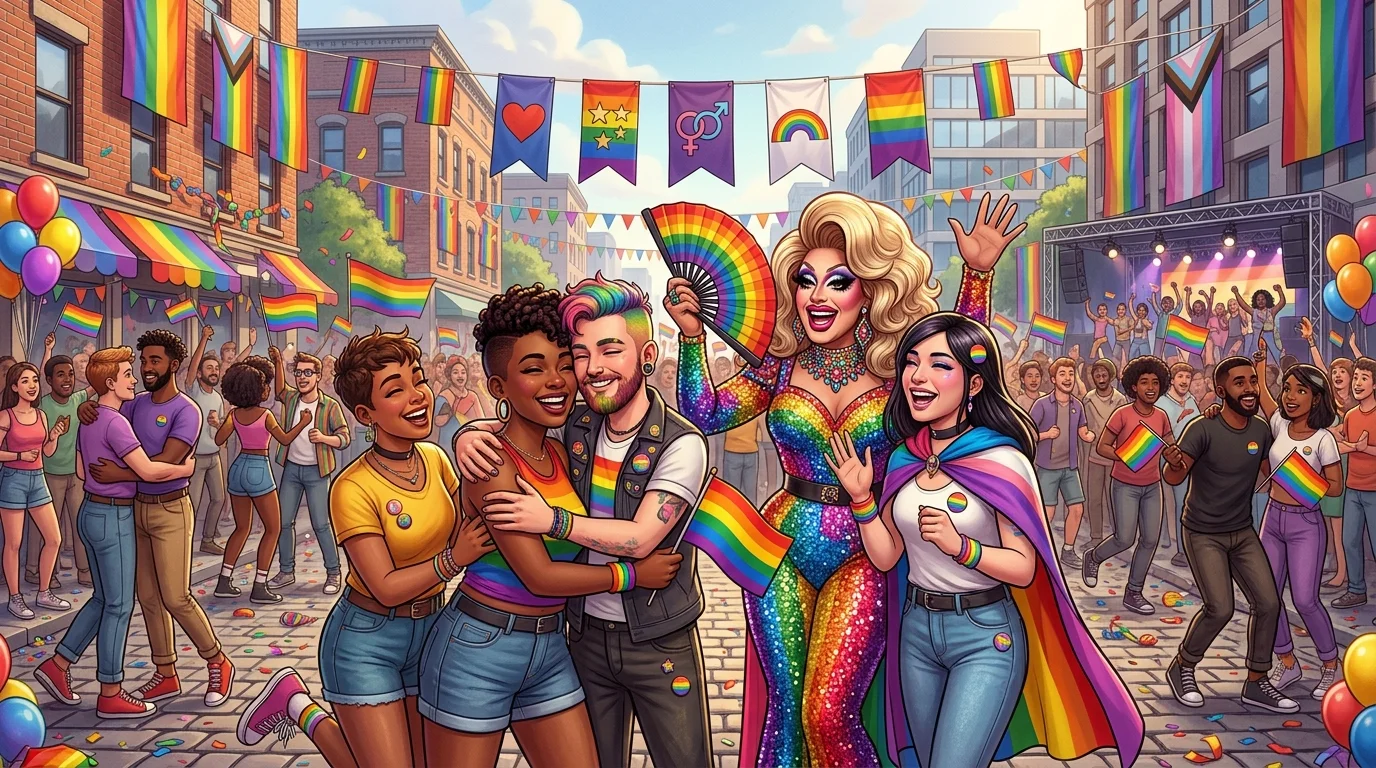
Queer Meaning LGBTQ
Within the LGBTQ+ community, queer is often used as an umbrella term.
Some people identify as queer because:
- They do not want a more specific label.
- Their identity includes multiple aspects of sexuality or gender.
- Their identity has changed over time.
- They feel the term better reflects their experience.
For others, labels such as gay, lesbian, bisexual, transgender, or pansexual feel more accurate.
Why Some People Identify as Queer
Many people choose the word queer because it offers flexibility.
Reasons include:
- Personal comfort
- Inclusive identity
- Avoiding narrow labels
- Reflecting fluid sexuality or gender
- Connection with LGBTQ+ community and culture
Identity is personal, and no single label fits everyone.
Why Some People Avoid the Word
Although many people embrace the queer meaning, others choose not to use it.
Reasons may include:
- Personal experiences with discrimination
- Family history
- The word’s past use as a slur
- Preference for another identity label
It is generally respectful to use the language that individuals choose for themselves.
Queer in Academic and Cultural Contexts
The queer meaning also appears in education and research.
Examples include:
- Queer studies
- Queer history
- Queer literature
- Queer theory
- Queer cinema
In these contexts, the word often refers broadly to LGBTQ+ identities, experiences, history, and culture.
Examples of Queer Meaning
Example 1
Person A: What does queer mean?
Person B: Many people use it as an umbrella term for diverse LGBTQ+ identities.
Meaning: General definition.
Example 2
Person A: Why does someone identify as queer?
Person B: Because they feel it best represents their sexual orientation or gender identity.
Meaning: Personal identity.
Example 3
Person A: Is queer always offensive?
Person B: No. Many people proudly identify as queer, but others prefer not to use the term because of its historical use as a slur.
Meaning: Context and personal preference matter.
Example 4
Person A: What is queer studies?
Person B: It is an academic field that examines LGBTQ+ history, culture, identities, and experiences.
Meaning: Academic use.
Example 5
Person A: Should I call someone queer?
Person B: Only if they use that label for themselves or indicate they are comfortable with it.
Meaning: Respecting personal identity.
Common Misunderstandings About Queer
Queer Is Not the Same for Everyone
The queer meaning varies depending on the individual.
It Is an Umbrella Term
Many people use it broadly, while others prefer more specific identity labels.
Personal Preference Matters
Some LGBTQ+ people proudly identify as queer, while others do not.
Related Terms
| Term | Meaning |
|---|---|
| LGBTQ+ | Umbrella acronym for diverse sexual orientations and gender identities |
| Gay | Person primarily attracted to people of the same gender (often used for men, but sometimes more broadly) |
| Lesbian | Woman primarily attracted to women |
| Bisexual | Attraction to more than one gender |
| Pansexual | Attraction regardless of gender |
| Transgender | Gender identity differs from sex assigned at birth |
| Nonbinary | Gender identity outside exclusively male or female categories |
| Gender Identity | A person’s internal sense of their gender |
| Sexual Orientation | Pattern of romantic or sexual attraction |
Is Queer Positive, Negative, or Neutral?
The queer meaning depends on context.
- Positive: Many people proudly use it as a self-identified LGBTQ+ label.
- Neutral: It is widely used in academic, cultural, and community contexts.
- Potentially Offensive: Because of its historical use as a slur, some individuals do not wish to be described using the term.
The safest approach is to respect each person’s preferred identity and language.
Related posts:
 Miles Name Meaning Origin, History, Personality Traits & Popularity (2026)
 Best Pick Your Brain Meaning Definition, Origin, Examples & Professional Usage (2026)
 Best CW Meaning Definition, Social Media, Texting, Medical & Other Uses (2026)
 Best Hurdle Meaning Definition, Types, Uses, Examples & Complete Guide (2026)